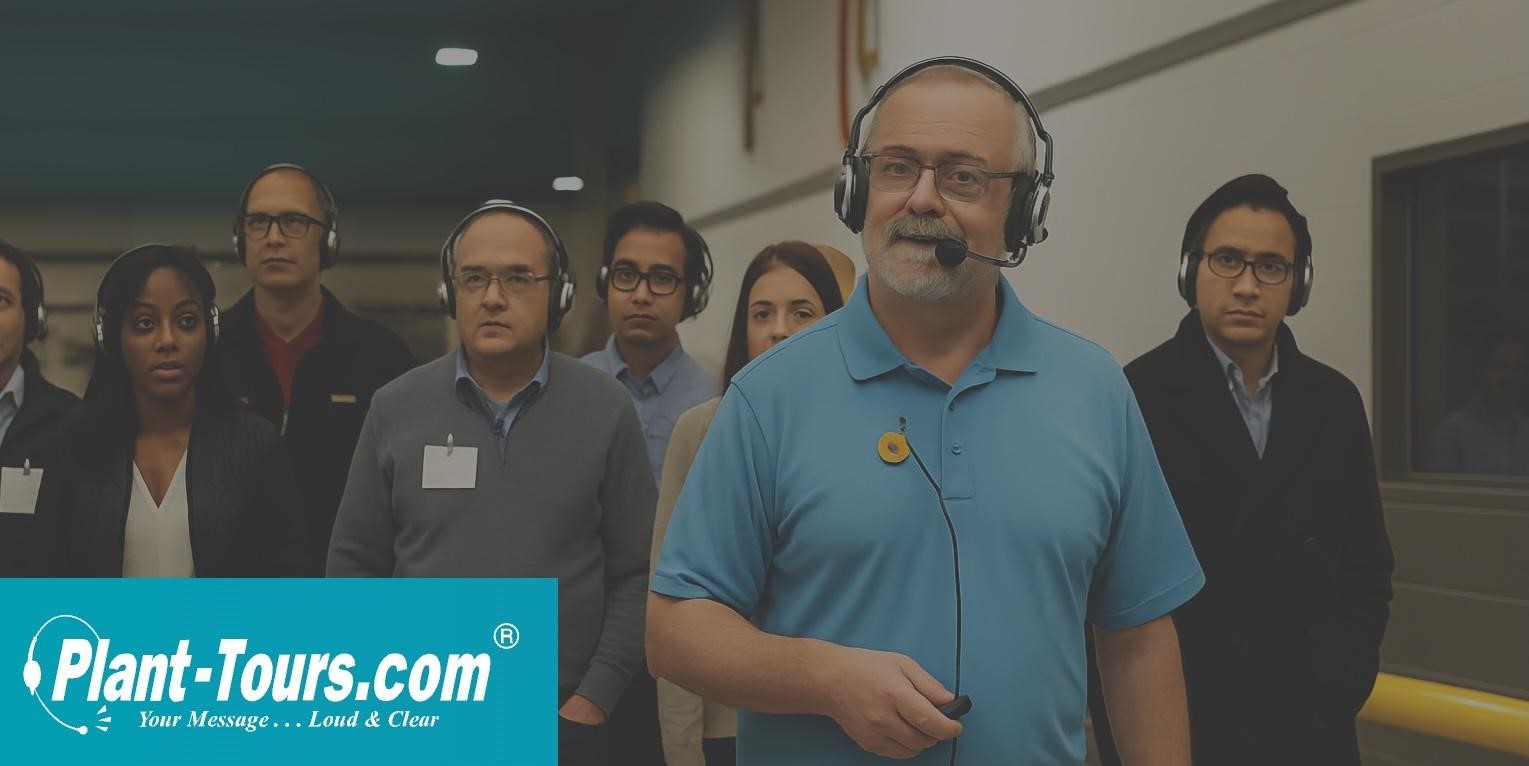
Gemba walks are considered one of the most important tools for lean manufacturing across various industries. This type of production floor walkthrough enables managers and leaders to observe employees and processes, thereby eliminating waste, minimizing safety risks, streamlining workflows, and more.
These walks are particularly effective for manufacturing and construction environments. However, they can also be applied to office floors, commercial kitchens, warehouses, and other production areas.
To maximize the efficiency of a Gemba walk, you need three main things:
- Gemba Walk Understanding. All parties involved should have a basic understanding of what a Gemba walk is and its goals.
- Gemba Walk Checklist to help you define your business’s strengths, weaknesses, and goals.
- Clear Communication. All parties involved in the walk and work should be able to communicate clearly. In louder environments, this may require aids such as headsets and/or transceivers.
In the guide below, we provide detailed information on everything you need to conduct a successful Gemba walk for your business. While we delve into “What is a Gemba Walk?” and the kaizen principles it’s rooted in, we also offer a Gemba Walk Checklist, key questions to ask during your walk, and expert tips to make the most out of the experience.
Understanding the Basics of a Gemba Walk
A Gemba walk is used to observe the workplace firsthand. Instead of relying on second or third parties, it gets management onto the production floor to interact with the core of their business. These walks are designed for observation, recording, speaking with employees, and gaining a deeper understanding of the innermost functions of your business.
- The Gemba Walk concept originates from Japan, where “Gemba” means the real place (or, in this case, the work area). “Walk” simply refers to physically visiting a location.
Understanding the purpose and roots of Gemba will help you plan out where to visit and with whom to speak. Remember, your business is a living, breathing organism, not some static prompt.
Aim for Continuous Improvement
“Kaizen” is the Japanese word for continuous improvement—something every business needs to succeed. Every day, we see the ramifications of companies failing to improve, whether that’s losing money, facing layoffs, downsizing, or closing their doors.
Successful businesses in your industry never stop being competitive. So why should you?
Gemba walks are an invaluable tool for retaining your competitive edge by facilitating meaningful improvements that cater to your business’s needs.
Go and Ask “Why?”
To “ask” is metaphorical and literal here. With the actual scientific methodology used in kaizen and the Six Sigma principles, you are observing data during your walk and asking the question:
“Why is X happening?”
This is you asking yourself how an issue arose and what can be done to change it. To find the answer, you need to observe and ask questions to those who are involved in manufacturing, distribution, and other relevant areas.
“Why is X happening? What do you think can be done about Y?”
This isn’t a process of barking decrees about what you think is best. It is a process of discovery and fine-tuning in order to take the best corrective action.
Visit workstations to observe firsthand, ask meaningful questions, and listen to the answers. Then ask, “Why?”
Show Respect
Japanese culture has a very long and storied history of honor and dignity. The same holds true with this business theory. You want to show respect in multiple facets here.
1. Show respect to the Gemba walk itself by planning accordingly, creating your checklist, and giving your walk the time it deserves. Plan the walk during a time when you don’t need to rush through it.
2. Be respectful of your environment, especially your employees. You’re not out on your walk to be a hall monitor or to seek out employee infractions. You are observing the organism as it operates in its environment.
Remember: The purpose of the walk is to observe and record observations, look for improvement opportunities, check for safety hazards, focus on your value stream, etc. Really focus on what’s happening in the work areas and look for inefficiencies, redundancies, dangers, and the like.
What Are the Objectives of a Gemba Walk?
Here is a quick list of some of the objectives you should be aiming for with your Gemba walks.
- Improve the productivity of your business
- Build trust with employees
- Make the workplace more efficient
- Improve kanban and KPI metrics through lean management
- Innovate your workflow
- Cut your costs where possible
- Identify and prevent safety hazards
- Improve your service
Key Elements to Include in Your Gemba Walk Checklist
When creating a Gemba walk checklist, include the tasks you need to complete before, during, and after your walk. This is especially essential for the first couple of walks while you are getting a feel for them. Key elements you want to include on your Gemba Walk Checklist include:
1. Key Processes to Observe
Write down what you want to observe. This doesn’t have to be lengthy—just a brief summary of any key processes, areas, or other relevant details that you want to focus on. Defining a walk theme can help. Whether it’s workstations or work areas you’ll be examining, an expense theme, looking for safety hazards, etc.
2. Objectives
Explain what the walk’s objective is to any team members joining you on the walk and to your employees. This isn’t a performance review, and you aren’t looking for faults. The goal is process improvement.
Tip: If you are scheduling multiple Gemba walks, schedule them for different times and/or days. An issue observed at 9 am on a Monday may not be visible at 3 pm on a Thursday, and vice versa.
3. Questions
Brainstorm key questions (see the next section for question ideas). Having a list of these on hand can keep you and the Gemba walk group focused.
One of the best ways to get answers on your shop floor (or anywhere else) is to ask your employees questions when you spot an issue—rather than relying solely on your data and/or asking later. Your frontline workers experience this environment daily and know it inside and out. Seeing it with your own eyes on a pass-through is helpful, but their insights are invaluable.
4. Tools
To make the most out of your walk, ensure you have a way to record your findings. Photos, videos, and good notes are all good ways to record what you’re observing. There’s a lot that you’ll miss in real-time that you’ll likely be able to catch once you view the recorded data.
You should also make a note to charge any team communication system so it is ready to go the day of the walk.
Tip: Don’t implement changes during the walk. Instead, take down your observations and analyze them later on. You don’t want to burden your employees, and you don’t want to implement a spur-of-the-moment change without first reviewing it properly.
5. Team Members
Don’t forget that your Gemba walk should be a team effort. It doesn’t have to include a large number of people, but it should involve more than just yourself. The more eyes, the better. Ensure that all team members are informed of the walk well in advance so they can schedule it comfortably.
Having a walk with multiple people allows more questions to be asked and more work areas to be observed (without the walk consuming the entire day).
6. Personal Protective Equipment
Ensure that you and any other walk participants have properly fitting personal protective equipment before walk day. This may include hard hats, hearing protection, safety glasses, and any other necessary equipment to ensure their safety in the heart of the action.
7. Post-Walk Actions
- Make a plan for implementing change, but don’t rush into it. Even if you observe things that can benefit from change during your walk, don’t act on them right away. Part of showing respect for the process is recording your observations and analyzing them before jumping into a plan of action.
- Consider what is going right. Of course, you want to identify and correct any problems, but don’t forget to also observe what is going right. This is the value stream of your business. Identify which department(s) add the most value and consider emulating their approach to create success in the other parts (streams) of your business.
- Make time to speak personally with your employees to gather their feedback. You’ve already observed and asked your questions on the floor; now is the time to collect their comments regarding the walk and any areas that need improvement you’ve identified.
- Continue to do your walks, planning out the process and the theme. This isn’t a one-off activity. Kaizen is to seek continuous improvement. Over time, you may see patterns emerge that would have otherwise been missed on a one-time walk. ee our g
See our guide How to Do a Gemba Walk for more information.
Types of Questions to Ask During a Gemba Walk
In this Gemba Walk Checklist question section, let’s review some of the types of questions you should ask and their importance.
Note that some of these questions can be directed at employees; however, they should also be something you consider internally during your walk. You will often find that answering a question leads to more questions—and that’s perfect! It’s all part of the process of getting a better understanding of your operations to facilitate change.
| Question | Importance |
| What sort of standard are we working toward? | You need to know what you’re working toward in order to achieve it. Create actionable steps for goals by using the S.M.A.R.T goal method. |
| Is our standard or process clear? | Everyone involved in the company should be clear about your standards and processes. If they aren’t clear on it, how do you expect them to achieve it? |
| What is the ultimate goal? | Knowing the goal of your company or a project is the best way to facilitate meaningful change. If your efforts aren’t directed at that goal, what are they aimed at? |
| What can be done to improve the process in question? | A practical and direct question to find solutions to issues with your process. This is a great question to ask employees as they often have firsthand observations that aren’t immediately apparent to management. |
| What kind of problems are we encountering? | You want to know if a problem is related to production, safety, etc. You can’t find a solution to an issue if you don’t know there is a problem in the first place. |
| How can we eliminate these problems and implement corrective action? | Brainstorming ideas to eliminate problems during the walk can be highly effective. Especially when discussing the issue with employees as they may have views you have not considered. |
| Why is (X) problem a challenge? | Identifying the hurdles that are stopping you from solving an issue can help you better address it in the long run. |
| What is the root cause? | Finding the root cause is key. For example, if a plant’s leaves are dying (a problem), your solution may be to cut off those leaves. However, leaves will continue to die unless you address the dry soil (the root cause). |
| What is the next step in fixing this problem? | Most problems can’t be solved in one step. By breaking down your problem-solving into multiple steps, the problem becomes much more actionable and manageable. |
| Do we have everything needed to handle these issues? | Some issues require additional resources and equipment to tackle. This can be likened to having a yard full of leaves but not having a rake or leaf blower. |
| What would help us solve these problems? | This may be additional staff, equipment, etc. However, it may also involve things like budgeting more effectively. This is a great place to get employee input. |
| What other questions should I ask? | These may be questions specific to your business or industry. Additionally, you will naturally encounter more questions as you take your Gemba walk. |
Leveraging Tools to Enhance Gemba Walks
A few considerations on tools that can make your walk more effective:
- Question Checklist: This can help you refocus at any given moment. Plus, it ensures you remember the questions that you want to consider or ask during your walk.
- Notes: To be fully present during a Gemba walk, we suggest turning your phone to Do Not Disturb (if possible). However, your phone can be a great tool to take notes, photos, videos, and voice recordings. That being said, paper and pen also work great to minimize digital distractions.
- Communication Devices: Ensure you can communicate clearly with all parties on the walk and with employees on the production floor. Constantly having to raise your voice over machinery or repeat yourself can be disruptive and frustrating for everyone involved. Using a Gemba Walk Communication System is ideal to avoid this. However, other transceivers that you regularly use on-site can also be effective.
Final Thoughts
A Gemba walk is all about kaizen—improving your business processes. It goes beyond KPI to transform your business by helping you identify what is working (and what is not), ways to save money, opportunities to increase productivity, and more.
Practicing Gemba walks regularly helps your business continuously evolve by grasping the root of business issues. Additionally, it assists in finding an effective solution to address these problems. You can use this as a tool for more efficient project management and to transform standard work into exemplary output.
Need help with communication on your Gemba walk? Over the years, our group communication systems have helped facilitate successful Gemba walks in a variety of noisy environments. For more information or to find the right system for your workplace, contact our communication experts.